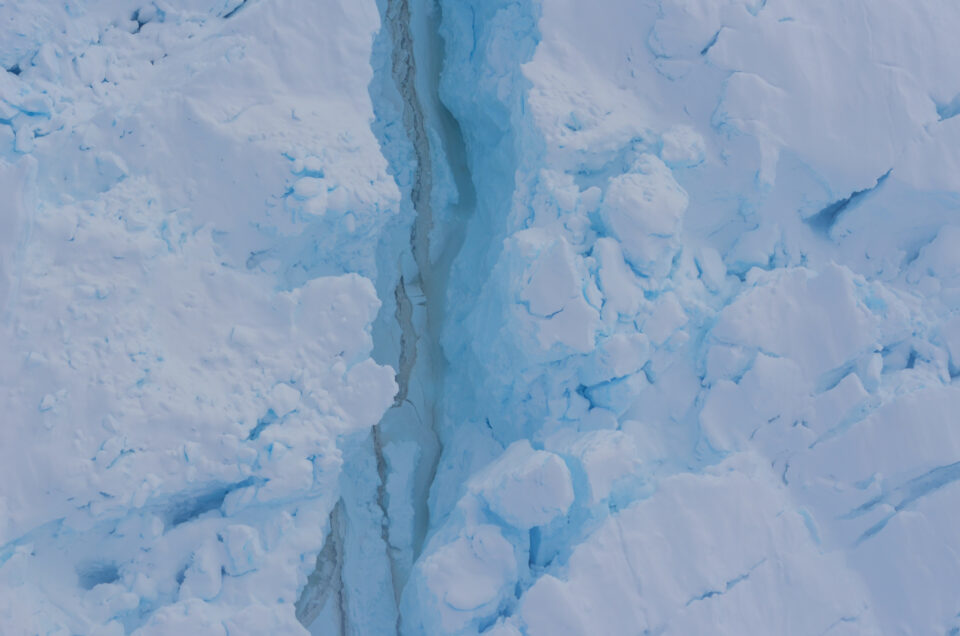
Six times since 2014, I’ve walked the Ice Sheet.
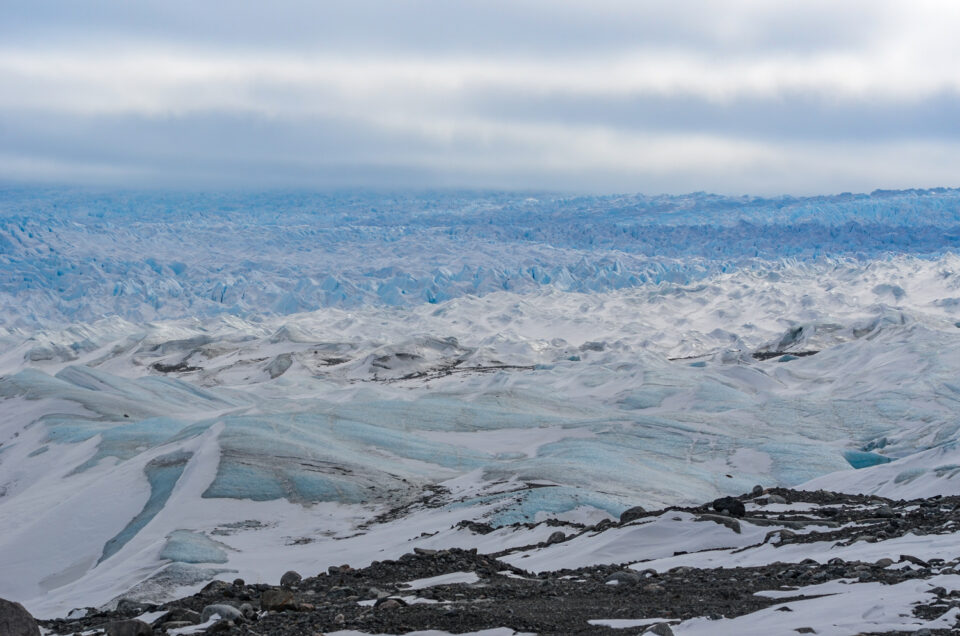
Together with Antarctica, 99% of the Earth’s freshwater ice is in Greenland. We know it’s melting. Oceans rising. Air warming. The planet’s balance is turning like a body in sleep. As the ice retreats, it reveals a landscape of debris at least 2.5 million years old. Rock and sand emerge like illegible text, like a language we’ve forgotten how to read, like hieroglyphs on an obelisk, words spinning below the threshold of the ear’s ability to hear. In 2018, above Kangerlussuaq, I collected materials from the Ice Sheet’s melting edge, fragments from the Earth’s oldest book.
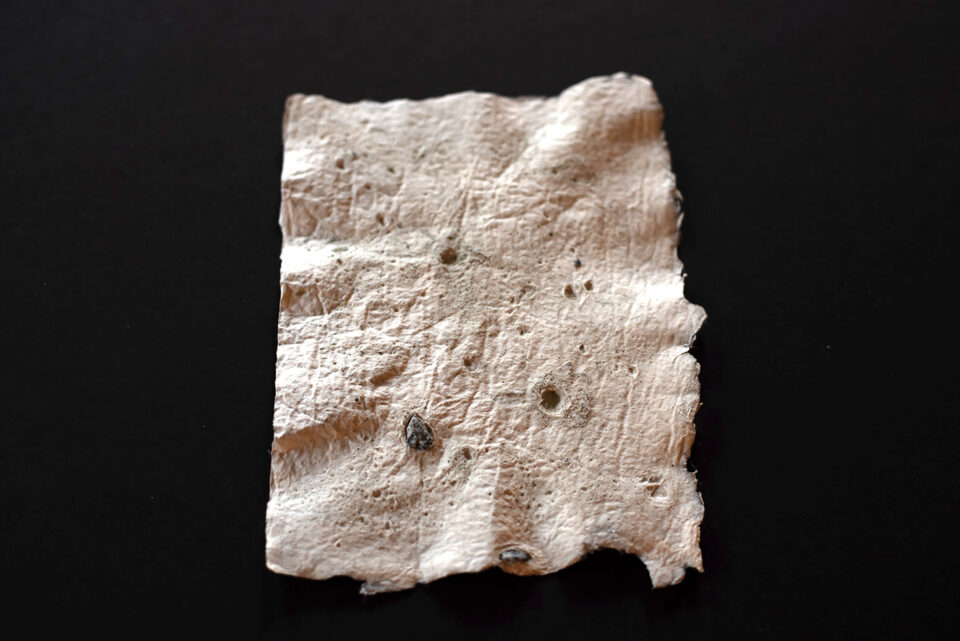
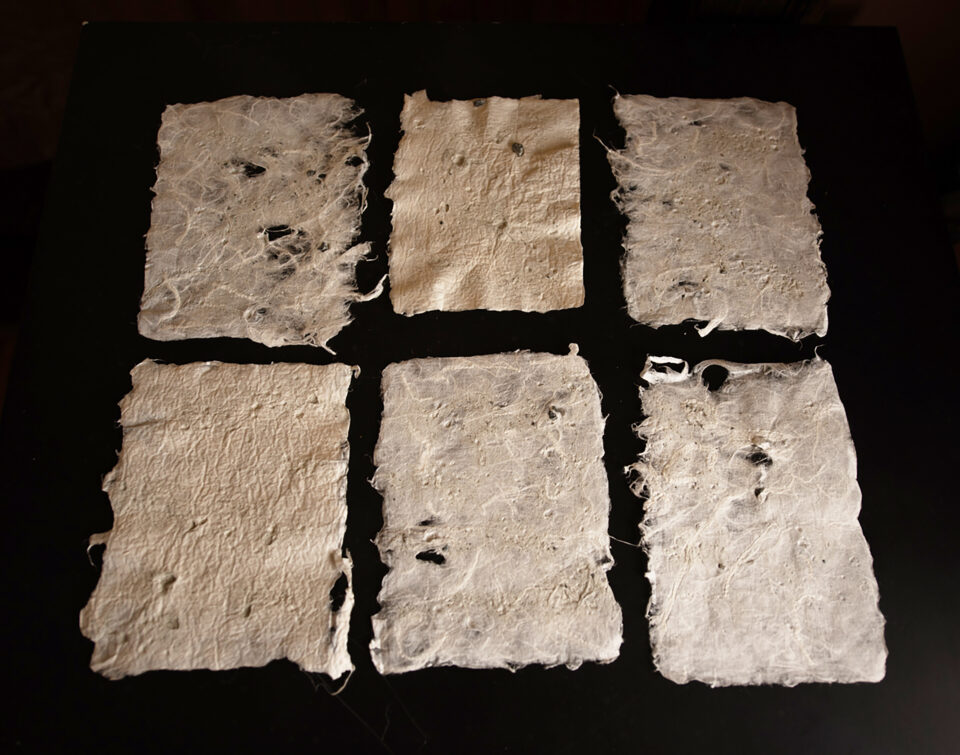
Later, in Yoonshin Park’s papermaking studio in Chicago, I molded this glacial archive from cotton, abaca, and kozo fibers. As I pulled the sheets from the water, I saw how some pages held voids, absences where meaning had melted away. How others carried textures like filaments intersecting in a spider’s web. How they all embodied strands that weren’t visible yet also make a web: air, atom, molecule. Material from exploded stars, black hole pull. The melting edge, the spinning of time forward and back.
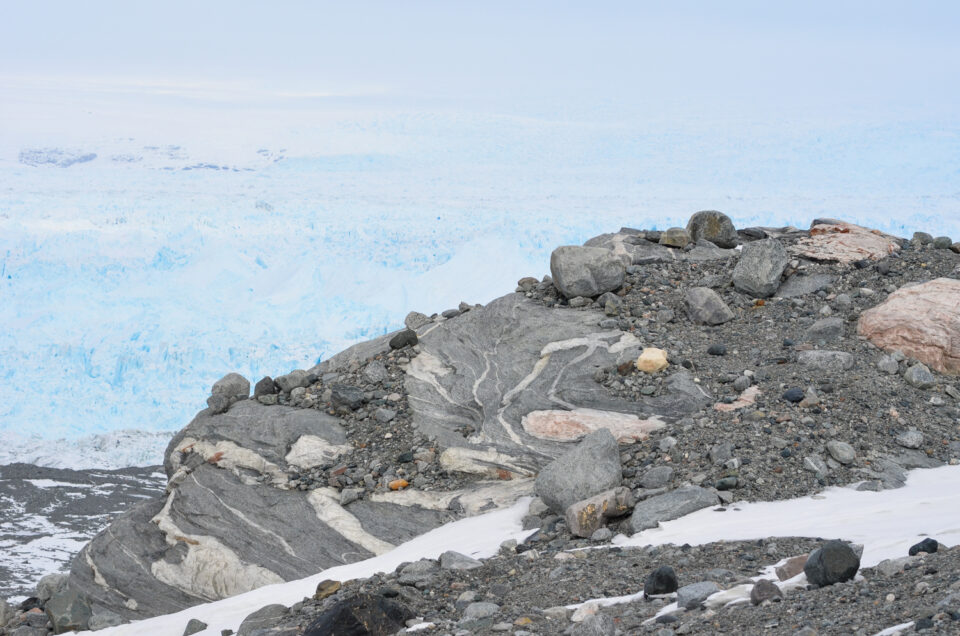
For over a century, American administrations have tried to purchase Greenland. 1867. 1946. 2019. And now again in 2026. Each attempt imagines sovereignty as a balance sheet, as if the land were a stranger’s home to be gutted and remodeled for a real estate deal. The tupilak carvings, gone. The qulliq seal oil lamps, gone.
But the paper sheets I made remind me of something else.
That the Ice Sheet writes its own ledger, one that can’t be balanced, bought, or remodeled. That some accounts can’t be claimed by signature and seal. That the land is inscribing its own narrative of time elastic, time relative. Past shaping the future, future dreaming of the past.
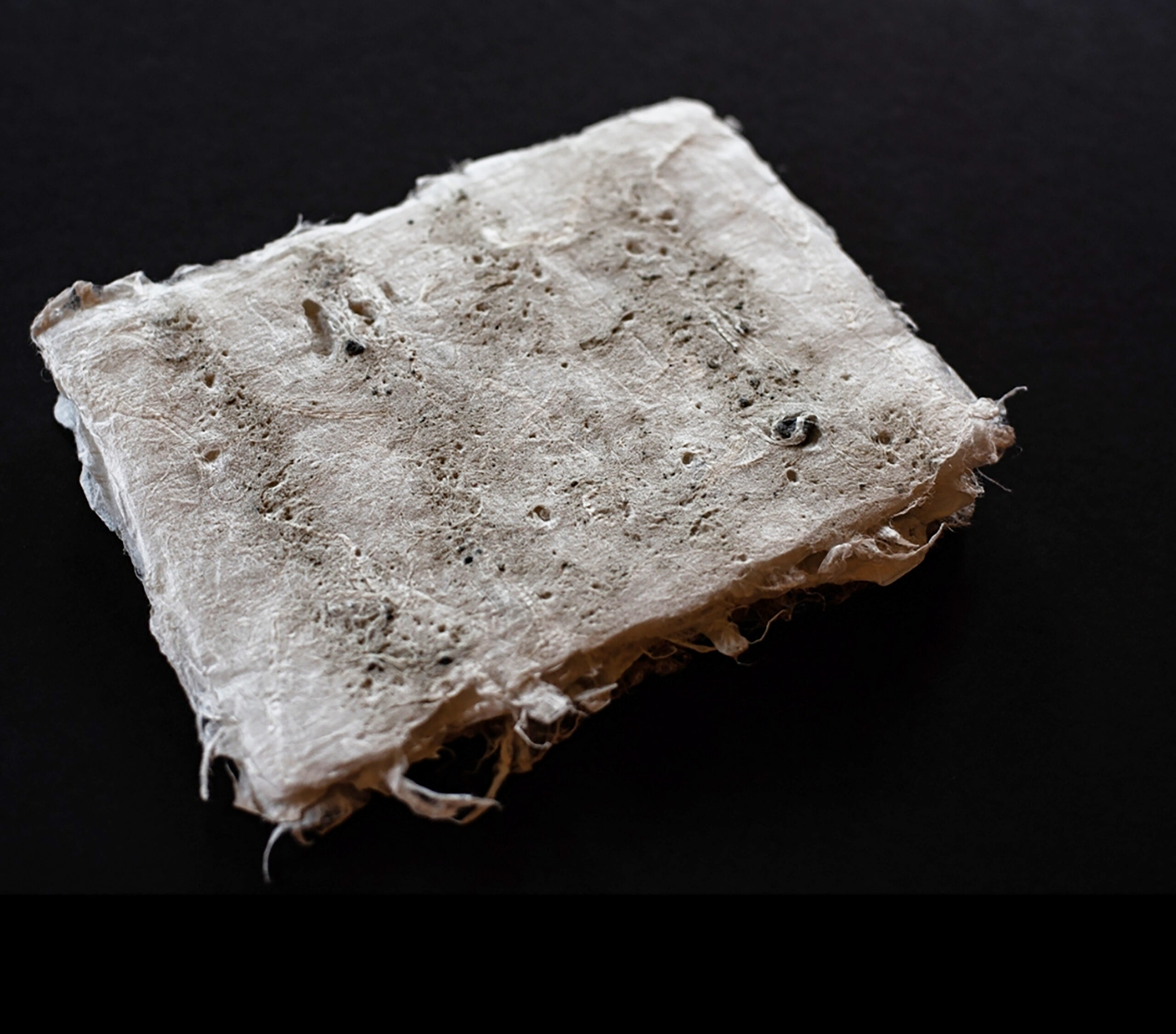
Maybe the best some of us can do is bear witness, hold these archives with humility, knowing they speak of forces larger than nations, older than borders, more basic than balance sheets can capture.
Unpurchasable.