
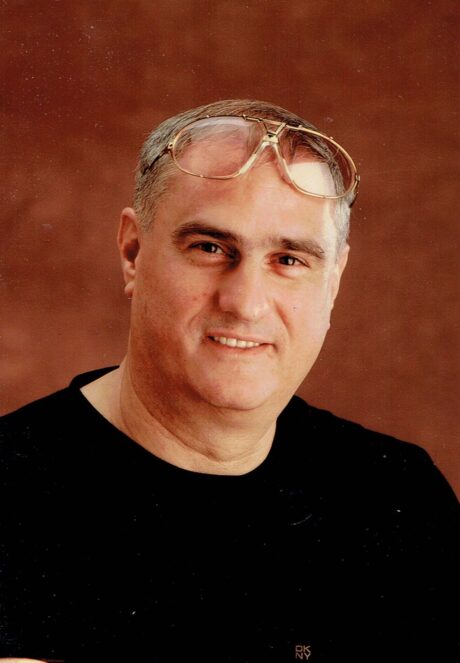
The first time I met Louis B. Colavecchio, aka Louie “The Coin,” federal authorities had recently charged him with making “massive amounts” of counterfeit casino slot tokens. The news had rolled over the Associated Press wire in a short but intriguing story about the bust of a Rhode Island man and his then-girlfriend at Caesars Atlantic City on December 28, 1996. When arrested, the couple had $47,000 worth of counterfeit tokens for eight of Atlantic City’s 13 casinos, stashed inside the trunk of a red Honda that Lou had specially outfitted to hold the weight – 800 pounds – without destroying the suspension, authorities said. They also found a loaded .22-cal. pistol in the car. Colavecchio had a pile of coins stuffed into a holster under his jacket, and he and his girlfriend had $8,600 in cash between them.
The arrests (federal authorities eventually called this the “biggest case of slot-machine token counterfeiting in gaming history’’) made a splash. The Providence Journal, where I was then a mid-career reporter, ran a short piece about Lou’s arrest. Assigned to elaborate on this breaking news, I drove to 1860 Mineral Spring Ave. in North Providence, just over the line from the capital city, where Lou had a jewelry shop.
I was about to meet – hands down – the man who ultimately became the most memorable character in my journalism career. I wanted to be a fly on the wall in Lou’s life, because he was a bona fide bad guy. He was charming, sly, and sleazy. What made him tick?
Privately, he often cracked me up. He broke the tedium.
*
Mineral Spring Avenue is ground zero for nail emporiums, beauty and tanning salons, fast-food joints, and clothing stores that deal primarily in polyester. The shop, “Diamonds in Design Ltd.,’’ was an innocuous storefront attached to a strip of equally small shops. Lou stood behind a counter, behind which there was a back room, which turned out to be the repository for the 3,600-lb. safe that was of such high quality, and so crack-resistant, that state and federal authorities finally had to call in a professional locksmith who used “highly specialized carbide tools” to drill it open. Lou also crafted the dies used to make the slot tokens in the back room.
The feds – or “The Initials’’ as Lou referred to them – found tokens for casinos in Connecticut, New Jersey and Las Vegas after the safe was drilled open; coins for the then- TropWorld in Atlantic City decorated with Lucy the Elephant carrying a howdah on her back; Caesars Palace in Las Vegas with a girl feeding grapes to a portly reclining Caesar: and coins for Foxwoods Resort Casino and Mohegan Sun in Connecticut, just over the Rhode Island line. Also, tokens with minaret crests for the Trump Taj Mahal and Trump Plaza Hotel and Casino in Atlantic City. Lou would later remark, “Trump was a chump.”
And so on. And the dies, used to create molds, for stamping out those tokens.
But there was little to no jewelry on display during that first encounter. So, was the store just a front for all those slot tokens hidden in the safe? Was he making the coins there?
I expected a no comment, for sure. I pictured a stereotypical movie-style gangster guy, who would immediately tell me, “Fuck off.”
Instead, there was Lou, remarkably gregarious and seemingly unperturbed, given the state and federal authorities breathing down his neck. He wore fancy loafers with tassels, a purple sweatshirt, and gold aviator eyeglasses shoved up on his balding forehead. He was roguishly handsome with deep-set brown eyes beneath dense eyebrows; ears close to the head; a bulldog neck and an imposing boxer’s build. He exuded a kind of charm that could really suck you in. At the same time, he looked like a thug and had Rhode Island inflection and vernacular. As it would become clear, he was a “mob-affiliated” criminal, but not a “made man.” A wanna-be, authorities say.
He embarked on his criminal career early. During college, he said, he swindled Catholics by selling mail-order rosaries in the name of a Catholic missionary. Except the priest was a fake, and the mission did not exist. He then pocketed the donations. He crafted silver pendant miniatures of the Pieta that he hawked outside the 1964 New York World’s Fair, where the real Michelangelo’s Pieta was on display. While attending Providence College, he hustled fake luxury sweaters and stolen raincoats. Later, he branched out into making lucrative fake slugs used for cheating commercial laundry machines, pay phones, soda and snack vending machines, newspaper vending boxes, et cetera. He said he made those slugs “for Raymond,” aka Raymond L.S. Patriarca, then head of the Patriarca Crime Family, who controlled the New England mob from Providence for more than three decades. Louie also “boosted” designer clothing, ran insurance scams and organized robberies, to name just a few of his criminal activities. Now, apparently, he had graduated into counterfeiting casino slot tokens.
Smart guy, bad seed.
“I’m in the middle of an obviously intense criminal investigation,’’ Lou said, smiling cheekily when we met that day. “Obviously, at this time, I would have no comment.’’
His formal language – uttered with Rhode Island inflection, and the genial manner in which he declined comment, made me want to laugh. Just who was this character, anyway?
The ProJo editors headlined my news story “Police: Trail of Counterfeit tokens leads to R.I. man,” an account of the arrest and charges against Lou and his then-girlfriend. That story noted the scare that shot through casinos across the country when federal authorities reported that Lou’s impeccably well-crafted counterfeit coins could not be detected from the real ones when they passed through slot machines. The fake tokens tricked the electronic sensors.
That marked the start of my years-long acquaintance with Louie, starting with his first conviction and federal imprisonment for the counterfeit casino coin capers. Then came the 1998 charge of defrauding his 92-year-old aunt, that ended in 2000 with a nolo plea, a 94-month suspended sentence, and donations to his aunt’s designated charities. Then, my brief “talking head” role in two televised documentaries about Lou, by then considered a master counterfeiter of national note (“The world’s greatest,” he bragged), banned from casinos across the country.
In November of 2013, Lou got busted for a sophisticated marijuana grow operation at his townhouse and served yet another suspended sentence. Two years after I took a buyout from the paper, Lou got busted again in 2019, this time for counterfeiting $100 bills. At age 77, he returned to prison to serve a 15-month sentence. He died in hospice care at the Rhode Island home of his daughter, Susan Taglianetti, just weeks after compassionate release from a North Carolina prison hospital. Court records reflect that he had chronic pulmonary disease, hypertension, and dementia.
Without a doubt, Lou remains my Number One favorite subject in a decades-long journalism career. He was “reporter gold” — an incorrigible raconteur, kind of like a Borscht belt comedian with Italian flair, plus a dash of danger. Eminently quotable, suspiciously accessible. Brimming with boasts, braggadocio and bullshit. Possessed of rare talents. (After all, he did for a time manage to defraud the casinos of millions). A rogue who was constantly winking at the world. Operating in daylight, daring anyone to catch him, and sure that they wouldn’t. Until they did, again and again. And again.
From the get-go, he gave off “a shine.” He was the kind of person whose stories and presence left me feeling weirdly charged up. He made me laugh to myself, a lot. At the same time, his darkness unsettled me. His heedlessness, his lack of remorse, his disdain for authority, in my amateur view pointed towards the sociopathic. One crime, the theft of more than $100,000 from his 92-year-old aunt, was particularly disturbing.
In his 2015 co-authored memoir, “You Thought It Was More: Adventures of the World’s Greatest Counterfeiter,” Lou wrote that he had maintained a close “affiliation” with the Patriarca Crime Family, led by New England mob boss Raymond L.S. Patriarca, in Providence. Lou said he was not a “made” guy, but useful to the organization. “You Thought it was More,” a raucous romp through Lou’s life of crime, women, wine and dirty deeds, was co-authored by Andy Thibault and Franz Douskey.
We had a cordial reporter/story-subject acquaintance, but I always proceeded with the notion that Lou might somehow trip me up, feed me unproveable bullshit, try to deflect me or sway my writing with his charm, pull some kind of scam on me. God only knows what.
“Nah,” I tried to tell myself. He wouldn’t bullshit me. But of course, that was a ridiculous assumption. Of course, he would try, so be wary. Everything was a game for Lou.
I also had my own weapon. As one editor bluntly put it, I looked in those younger days “like Alice in Wonderland” and could appear “naïve” (read, not too bright). Being underestimated often proved an effective façade. You could say Lou and I had that in common.
As for violence, Lou looked like he had it in him. Five-foot ten and (a muscled) 210 pounds, according to court documents. While his criminal record does not reflect convictions for violence, he wrote in his memoir about hiring a strong-arm to beat a man who owed Louie $3500. Lou stood by and watched while the strong-arm pounded the man until “the guy’s nose was spitting blood like Old Faithful.” When the man still would not cooperate, Lou ordered the beating resumed. “You could hear the guy’s fuckin’ nose breaking in a couple of places,” he wrote, “and the familiar sound of a broken jaw.” So, yeah, Lou had it in him. Or he paid someone who had it in him. Or both.
*
Lou was a native Rhode Islander, from North Providence – that’s “Naught” Providence in Rhode Island-ese, who spent childhood summers in Warwick. He was a highly intelligent guy who earned a business degree at Providence College. He had apparently absorbed the professional talents of his father, the late Benedict Colavecchio, a jeweler and master tool and die maker, and owned two downtown Providence tool shops. Lou’s father also taught tool-making at Rhode Island School of Design, according to his obituary in the ProJo. *(Note of special interest: Benedict used his craftsmanship to “make his own teeth” after his natural teeth wore out, a relative says). Louie eventually opened Trop – his own downtown jewelry store. After designing and hand-crafting fancy jewelry, Lou took those talents further, crafting the near-perfect slot tokens; among the best the U.S. Secret Service and New Jersey Gaming Division of Gaming Enforcement investigators said they had ever seen.
Call Lou what you will – a scoundrel, a con man, a mob “affiliate,” a wanna-be wise-guy – he was of a type that makes Rhode Island the weird and quirky place that it is. Criminal enterprise and corruption have long been part of the state’s beating heart, and Lou was vintage.
A few months after Louie was charged with making phony slot tokens, two fishermen stepped on a bag in the Woonasquatucket River in Providence. It broke open, revealing shimmering gold and silver coins. At first, the father and son thought they’d found big-time loot. They lugged the coins out of the water, looked closer, and realized they were slot tokens for Foxwoods Casino and other gambling emporiums. Some were blanks. Then they recalled that story they had read recently about the bust of that counterfeiter, and turned the coins over to police. The Secret Service, which regulates U.S. currency, confirmed they were fakes. Was there a connection with the counterfeiting case? The Secret Service said, “We’re looking at the possibility.”
Years later, Lou told me he had dumped some less-than-perfect bogus tokens at the mouth of Narragansett Bay, behind what was then Shooters Nightclub. Walk to the end of the pier and dive in, he told me. Fish around. You’ll find plenty more of them!
*
Lou described his two-plus years at Fort Dix, New Jersey as some of the best of his life. He and his wise-guy and “affiliated” prison pals were making lasagna and spaghetti and meatballs with imported pasta they’d snuck in, avoiding the below-par prison food. In his 2015 memoir, he described how he played bocce and claimed to hold a no-show plumbing job at the prison, while incarcerated. That is, he had the job, but neither he nor other plumbing department “employees” did any work.
The U.S. Treasury at some point consulted with Lou. They wanted to know why the U.S. Mint’s dies petered out and broke after some 300 strikes, and Lou’s held up longer. They paid him $18,000 for his advice.
“Mine were better,” he told me. “That’s all.’’
“That’s all” is an understatement. Lou started out by crushing the originals and getting the exact breakdown of their composition, that he then replicated. Early in the investigation, an official from the manufacturer of the real casino tokens declared Lou’s fakes as authentic. A New Jersey State Police gaming division detective sent them back for another look. Only when they were split open did they reveal an alloy that was a slight degree different. Before Lou’s arrest, his coins were able to trick casino slot machine censors in New Jersey, Connecticut, Las Vegas and elsewhere. Because of Lou, casinos nationwide began phasing out coins, and used paper ‘tokens’ instead.
*
Lou and I met again in 2000, just months after his release from Fort Dix.
He was sitting in Providence Superior Court, where he was charged with siphoning nearly $120,000 from his aunt’s bank account, in 1997. The charges were drawn up during Lou’s incarceration. A prosecutor alleged that Lou had helped himself to money his 92-year-old aunt, Carmella Colavecchio, had bequeathed to him in her will – except that she was still alive. The court record reflects that he fraudulently opened a joint bank account in his and his aunt’s names, and over time, withdrew $117,000. His then-girlfriend had co-signed the account.
Lou said it was all “a misunderstanding.”
That morning in court, Lou wore a suit and tie, and again, expensive-looking tasseled loafers and the trademark eyeglasses. (Did he glue them to his forehead?) He projected that same friendly demeanor as he had the first time we met. Court was in recess, and Lou sat alone in the wood-paneled courtroom while his lawyer, former Rhode Island Atty. Gen. James E. O’Neil, was elsewhere.
“Do you remember me?’’ I asked Lou.
“Oh yeah,” he smiled. “But I can’t talk about the case.’’
We chatted briefly. Sensing that time was running short, I hurriedly inquired, “ … The fake slot tokens – I’m guessing they were really good?’’
Lou grinned. “Yeah. They were really good.” (Wink wink).
Just then, O’Neil entered the courtroom. He glanced at his client, then glanced at me.
“Hey! You’re not talking to her, are you?’’ O’Neil said. “You shouldn’t be talking with her, Lou.’’
“Eh – no. Hey! I haven’t told her anything,” Lou replied. “We’re just saying hello.’’
In the end, Lou entered an Alford plea – essentially a no contest plea. That meant he did not admit to embezzlement, but agreed that the prosecution could likely prove the charge. His planned defense had been that he legitimately charged his Aunt Carmella $25 an hour for 840 hours of work, regularly helping around the house. Meanwhile, suspecting her nephew of wrongdoing, Carmella had disinherited Lou. According to Carmella Colavecchio’s 1999 court deposition, (given while Lou was still in prison), “He took advantage of me, ’cause I was old, alone (inaudible) and that’s how it happened.” She died before Lou reached the plea agreement.
My initial online report included an explanation of the Alford plea. At Lou’s subsequent sentencing, the judge ordered Lou to serve four and a half months’ probation and make $20,000 restitution to four of his aunt’s charities. The judge granted that lower amount because as he noted, Lou also owed $90,000 restitution to the casinos he’d swindled.
Afterwards, in the hallway, Lou made it clear that he wasn’t happy with me. He said my blog post didn’t quite get it straight. Well, to qualify that, he said I got it straight as far as what went on in court. But in Lou’s opinion, I made the situation look worse than it was. “A misunderstanding,” he reiterated.
“You made me look bad,” he said. He wasn’t thrilled. I wondered whether I should be concerned.
He wasn’t smiling. His eyes were unfriendly. He breached my personal space. So yeah, I thought, he was trying to make me uncomfortable. Was it a threat?
Too bad. His posture, his tone – I didn’t appreciate any of it. Not to mention, he was trying to feed me a line of bullshit. In truth, that was the only time Lou scared me.
After that, he stuck with his “charm” approach.
Louie stayed out of the headlines for a while. Then, in 2003 or 2004, we both received calls from a documentary filmmaker. The History Channel was producing a documentary series, “Breaking Vegas,” on casino cheats and others who went to great lengths to make money at casinos. They intended to include Lou’s story, and asked me to be a “talking head.” Which required that Lou and I chat some more, so I could sound informed on TV about Lou’s background, his coin-making process and so on. I cleared that with the editors.
Fun!
Our first sit-down was at the eclectic White Electric Coffee shop in the West End of Providence.
Lou pulled up in his flashy red, top-down convertible. Otto, his Airedale terrier, sat in the passenger seat. Otto was a mass of tan and black curls. With his perfect upright posture, the dog looked, at sidelong glance, like a small human.
Lou entered and sat down. He wore a tantalizingly soft, butter-yellowish leather jacket, so soft that I wanted to run my hands over it. He wore what he said were Michael Toschi cobalt blue suede driving loafers, with snake-skin inserts that were possibly genuine. And again, those fancy aviator glasses that threatened to slide down his forehead.
“As I was driving over here, I was thinking, ‘She’s going to think I look too ‘Guido’, even for me!’” he said. Ha hah hah!
Lou said he bought the jacket in Italy. The shoes? He was way into shoes. But the piece de la resistance, was Lou’s gold watch, of his own design. He showed the engraving on the back.
“I had my prison number engraved on it, to keep me humble.”
I succumbed to a paroxysm of laughter.
Lou offered details about the line of designer eyewear he had begun to craft in prison. All gold and such, some with diamond chips sprinkled in. Upscale frames for the discerning buyer. He called this eyewear line ‘L. Bené’ (as in `Louis B’) – the Casino Collection.’
“I had a prototype and everything, all made up.”
The first History Channel taping, in a Massachusetts hotel, went fine: the producer complimented my “natural story-telling” abilities. For a second taping, in New York, I sat in front of a blue backdrop, smiled rigidly and rambled incoherently about Lou and the slot tokens.
The History Channel aired “The Counterfeit King’’ on April 5, 2005. This episode, devoted entirely to Lou, was one of the televised 13-part “Breaking Vegas’’ documentary series.
Friends joined me for a watch party, since the thought of seeing myself on camera unnerved me. We drank until we were jolly.
The show featured an actor who vaguely resembled Lou. Balding, with fancy glasses shoved up onto his forehead. Those re-enactments brought the viewer through Lou’s purchase of his electronic discharge machine (EDM) and the process of stamping out blanks with his partner, a known mob affiliate. The partner prepared the steel used for the dies at another location: a cinderblock building on Charles Street in North Providence. Lou then took that material, made the dies and pressed the tokens at Diamonds and Design. Lots and lots of tokens. The partner cooperated with authorities. His testimony helped send Lou to the slammer.
There were some shots of a North Providence condo complex, where Lou had been living. The re-enactment showed Lou and an actress stand-in “girlfriend” packing the coins in the trunk of his Honda; then the couple passed the coins in Las Vegas and Atlantic City. There was a dramatic reenactment of Jim Pflaumer, the New Jersey State Police gaming detective, trying to chase Lou and his then-girlfriend down in Caesar’s Resort Casino in Atlantic City. Pflaumer managed to get a license plate as they drove away. It came back to Louis B. Colavecchio in North Providence. A few days later, Lou and his girlfriend were arrested at Caesars casino.
I made four extremely brief appearances in “The Counterfeit King.” They clocked in at 33 seconds. That’s right. Thirty-three seconds, total. The documentary inaccurately labeled me “Crime Reporter.” Maybe that sounded flashier than catch-all, general assignment reporter.
Lou called me on my cell phone the minute the special ended.
“It’s Louie!” I told my friends, with equal inebriated pride and embarrassment. I was shamefully proud that the criminal star of the show was calling me. And ashamed and embarrassed that the criminal star of the show was calling me. By now, we were on chatty terms; make that from a careful distance on my part.
“Yay Louie!!’’ we yelled in a drunken Greek chorus. “Way to go!!!’’
But Lou was freaking out.
“I HATED the fuckin’ thing!’’ he shouted. “I would’na worn that bullshit stupid outfit that asshole had on!! They made me look like a chump!!’’ Lou underscored that he would never be caught dead in polyester. “I hated it!” He was yelling so loudly, I had to hold the phone away from my ear. “Hated it!!! Fuckin’ polyester! Fuckin’ chump!!!!”
Our little viewing party thought differently. We screeched with laughter. Although it was impossible to condone Lou’s criminality, we enjoyed watching the casinos getting payback. Meanwhile, Louie was a star, of sorts. Despite the yelling, no doubt he loved all of this. Fast-forward some months, and Louie naturally boasted that “The Counterfeit King,” had become the most popular episode in the series.
Next, the BBC did a special on Lou. Which afforded further interview opportunities. For that BBC taping, at Lou’s house, I went to Sephora for a make-up job.
“You look pretty!” Lou said. “All dolled up!”
Louie the Ladies’ Man. Kind of creepy, but hey.
I never saw the BBC special, and therefore cannot say if Lou revealed anything new, or just reveled in more self-aggrandizement. I also have no clue how many minutes or seconds – if any – my interview clocked in. Just as well.
*
Now and then, if a tedious story assignment or general malaise dampened my mood, I would call Lou from the newsroom to cheer myself up, as in, “Hi Lou! Just checking in.” My other purpose involved the remote possibility that Lou might spill useful information. Meanwhile, everything that came out of Lou’s mouth was hilarious. It was fun chatting up the bad guy. Lou was a born bloviator. Yack, yack, yack. The guy needed an audience. “Amusing” served as his form of deflection.
A few anecdotes: Otto the Airedale terrier suffered from arthritis, or maybe it was hip dysplasia. Lou would bring his beloved canine for swim therapy at a Providence animal hospital, coincidentally situated just blocks from my house. I pictured Otto in his seat in the red convertible, then trotting out – or being carried – into the facility. Did Lou encourage Otto from the sidelines? As in, “C’mon, Otto! Swim for Daddy! You gotta get bettah!”
Otto did great, Lou said. Anything for Otto!
During another call, Lou related that he was undergoing acupuncture for pain.
“I got needles in my ass!” he said. An unwanted image lodged in my brain.
At some point after I stopped covering Lou’s exploits, we had a series of sit-downs for a potential magazine piece. I had not pitched the idea to any publication, but intended to do so in the future. This filled out the picture in a radical way.
Lou told me he spent his formative years at the former “S&S” bar, which he described as a wise-guy hangout on Federal Hill he claimed was overseen by the mob. There, he said, he developed wise-guy relationships that benefited from his many talents.
His wide-ranging technical expertise made him valuable to “the Providence Office.” As he put it, “I was a very important gear in their mechanism.”
“I made [telephone] slugs for Raymond,” he said. “I made more Gucci belts than Gucci ever made in his life.” He said he made “black boxes” to cheat the phone company – devices whose electronic circuitry allowed free long-distance calls. And drums for drug smugglers.
He mentioned some small-time early stuff. My favorite involved counterfeit timepieces.
“We used to sell ‘one-lung-ers’ for five bucks at the train station,” Lou said.
“What’s a ‘one-lung-er?’”
“You know. It’s a watch! It takes one breath and then it dies.”
*
One interview took place at Lou’s townhouse in Pawtucket, Rhode Island’s second-largest city. Affectionately nicknamed “The Bucket.”
“You’re really gonna love my new snowman!’’ Lou said on the phone by way of a landmark. “I just put it up!! Got it all lit up and everything! Can’t miss it; it’s right by the front window!”
I could hardly wait.
Traffic turned the 10-minute drive into a half-hour ordeal of watching people giving each other the finger from the windows of their SUVs, talking on their cell phones, pulling illegal traffic stunts, including the brazen “U-ee” (U-turn) in four-lane traffic. Who knows why, but many Rhode Islander drivers are notoriously pissed off to the degree that Wisconsin is bursting with cheese.
*
Lou’s street was like a short afterthought carved into a remnant of a suburban plat. And sure enough, there stood the snowman, an eight-foot, plastic, lit-up, blow-up snowman, standing at cheery attention on a thin crust of snow. My mind tripped over an image of Louie “The Coin” braving a stinging December cold to inflate his plastic snowman with a bicycle pump.
“Yeah! Hey! Come in! Come in!’’
Otto the Airedale jumped from behind the door, licked my hand, then sniffed my crotch with his tube-like snout.
“Otto – Otto be nice. Hey – uhhmph! Hey! Don’t sniff! Be nice!’’
One foot inside the townhouse and you were in the living room, where Lou’s cushy Naugahyde chair occupied prime real estate. No sooner did I sit down on a couch then Karina Zharkiah, Lou’s Russian wife, arrived home. She carried a bag of groceries with a box of Kellogg’s cornflakes poking out from the top. Her auburn hair looked slightly worse for teasing, and her eyes had a droopy, sad sort of look. But her face came alive when she smiled.
Lou craned his neck to look at Karina, then nodded towards me
“Karen – Karina. Karina, Karen.’’
From then on, I barely understood a word Karina said.
As Otto persisted in getting to know me, Lou said Otto came from the same breeder as an Airedale owned by Luigi Giovanni “Baby Shacks” Manocchio. “Baby Shacks” rose up to become New England Mob boss in 1996, a dozen years after long-time boss Raymond L.S. Patriarca, Sr. died. Manocchio’s brother also owned an Airedale from the same breeder, Lou told me that’s who gave him the dog.
Manocchio operated Addie’s Laundromat and ran the New England mob from there. The laundromat was at the far end of Atwells Avenue from Patriarca’s Coin-O-Matic company that served as Patriarca’s New England mob “front” when he was alive. During Patriarca’s earlier days, a number of “made” guys and others on Patriarca’s hit list bought the farm execution-style along that main Federal Hill stretch. After Patriarca died, the New England Mafia began a gradual slide, although the beady-eyed, rising star “Baby Shacks” Manocchio did manage for a time to resuscitate the organization from Providence. He ceded control in 2009 as the last Rhode Island boss of the New England crime family. Not long thereafter, Manocchio went to prison.
Lou claimed close association with Manocchio, just as he had claimed with Patriarca. He boasted about a picture of himself, Manocchio and Manocchio’s brother, with their three Airedale terriers. “They were all lined up. It was cute,” he said.
*
I had brought left-over Christmas cookies to Lou’s house. Lou laughed, took the plastic container full of home-made cookies and set it down on the coffee table.
“Oh!’’ He grabbed his gut. “Hey I’m on a diet. But maybe I’ll have a couple.”
Karina was all nervous smiles and apologetic body language.
“Ah, would you like some tea?’’
Before I could answer, Lou interrupted.
“Hey, Karina. Get us some tea. Please. Poor Karen, I haven’t offered her anything to drink yet. We need some tea.’’
Meanwhile, Otto stuck his snout in the cookies and gulped two or three.
“Hey! – eh! Eh! No fuckin’ way! Get over here!’’
Lou bolted from the recliner and grabbed Otto by the collar. He pulled Otto towards the door, then bent down and got in the dog’s face.
“Hey, Otto. You know Daddy loves you. But you’ve been naughty and you’re gonna have to have a TIME OUT. You get that?’’
My mind leapt to Lou yelling such commands at lady friends.
Meanwhile, Lou had papers spread out on a coffee table. He was busy with his aforementioned memoir, “You Thought It Was More: New Adventures of the World’s Greatest Counterfeiter.” He was on a roll.
“This is gonna be big. I mean, it’s coming along fabulous. I showed it to the agent and he loved it. And he’s talking movie deals, the whole ball of wax.”
Karina interrupted constantly as I tried to elicit more of Lou’s life of crime. I still couldn’t understand much of what Karina was saying, so I smiled and nodded at her while Lou delved into his “affiliations.” My neck ached with back-and-forth.
“There was a street called Shoo-Fly street. Well, it wasn’t a real street – it was called Croom Street, but we called it Shoo-Fly street. It runs in back of Atwells (Ave), down to where the railroad tracks are – you know, that was kind of a dumping ground.’’
“Excuse me?’’ I said.
“You know,’’ Lou said. “A lot of guys ended up down there.’’
“You mean, dead?’’
“Yeah, dead.’’
“Good to know,” I said. Actually, not good. I briefly considered that I might have to enter witness protection, should Lou blab about some unsolved murder or other.
Attempting distraction, I motioned towards a framed photo on a shelf.
“Who’s this?’’ I asked, pointing to a man wearing a priest’s collar, standing next to Lou.
“Oh, that’s my brother. He’s a priest, in the Amazon.’’ Lou said his brother “comes out of the rainforest every couple of years” to visit. I thought surely, he was making this up. But the priest in the picture did resemble Lou, and in fact, a quick Google search revealed that Lou’s brother, Ronald Colavecchio, S.J. was at that time a Jesuit priest serving in Brazil.
Try wrapping your head around that one.
“So, what does your brother think of, you know, your activities?’’
“Oh, well.’’ Lou smiled. “You know, he loves me. He doesn’t say nothin.’’
From left field, Karina tossed her only line that I could understand: “He’s preeeest! Not judge!’’
“Yeah,’’ Lou said. “That’s right. He doesn’t judge me, does he Otto?’’
Lou bent down and grabbed Otto’s snout.
“Huh, baby. Hey – you know Daddy loves you.’’
Big kiss.
*
During that visit to Lou’s house, he relayed colorful stories; similar versions later appeared in his salacious memoir.
That included his early Providence home base, the S&S bar on Federal Hill.
“The S&S bar was a charming place for me. There was all kinds of characters there. There was one guy there – he was a broken-down guy like you might see in a cartoon. And he’d sit at the bar, you know. A guy that lived his whole life and never left a footprint, you know? And he would say, `Oh, my mother made the most beautiful meatballs and spaghetti that you ever had in your life. She makes a fagioli nobody could beat.’ And then Andrew would come up. Andrew was a big rough guy … And he’d sit around and he’d say, ‘What the fuck does your mother know about making meatballs and macaroni?’ He’d sit around and say, ‘What the fuck’s the matter with you? The best chefs are men. Your mother’s nothing.’’’ Not a day went by that I didn’t go to the bar. And the bar had a rocking chair. The rocking chair was mine. If you were in the rocking chair, you left the rocking chair when I came in, because it was at the end of the bar and you were gonna do business with me.’’ Blah blah blah … bah da beep.
Lou definitely held a high opinion of himself.
Former State Police Colonel Steven O’Donnell described Lou as a “mob wanna-be.”
“We knew who he was … he was another street criminal who found a way of making a buck. A lot of people who get arrested, they inflate their sense of importance.”
O’Donnell, now retired, said, “I know the players. I’m pretty well read. I know a lot of it from my undercover experience. I will tell you he (Colavecchio) had an inflated opinion of himself … It’s like a badge of honor for these guys that they know somebody.”
Brian Andrews, retired Captain and former Detective Commander for the Rhode Island State Police, noted that Lou didn’t have what it takes to become a “made” man. “You have to have killed someone,” Andrews said. “You have to have a recommendation.” But Lou’s craftsmanship was valuable to the Patriarca Crime Family. “Slug-making was a big operation,” Andrews said. “It was one of many of Patriarca’s crime rackets.”
*
In August of 2007, Lou told me that Karina, his second wife, had drowned off Gaspee Point in Warwick.
Lou told police he’d last seen his wife in shoulder-deep water during low tide, while he was sitting with his dog on a blanket, according to a report in the local Warwick Beacon. After taking his dog to the car because “the dog was attracting fleas,” Lou returned to discover Karina was nowhere in sight. He called police, who called in the Department of Environmental Management and the Coast Guard. Karina’s body was found approximately 1500 feet offshore. Lou theorized that she’d been pulled away in the surf.
*
“You Thought it was More” was published in 2015. The soft-cover version is no high-end production. It has any number of misspellings. Pages fall out of my own copy with alarming frequency.
A New York Times critic praised the book as “a profane and raucously funny memoir of his life of crime.” A world of “hot cars, hot jewels, hot women …”
Lou also left for posterity another accounting of his counterfeiting crimes in a video titled, “Winning at Slots.” It opens with a torrent of coins clinking and clanking out of a slot machine. It features Lou tutoring a man identified as his “Cousin Carl,” a short, spherical, roly-poly fellow. Between them sits a mock slot machine.
“Lou, is that a slot machine?”
“Yeah. But it isn’t a real slot machine.”
“Haven’t you been banned from like, every casino in the country?”
“Yeah,” says Lou with that wise-ass grin. “And some in the world you never even heard of.”
In this video masterpiece, Lou instructs Carl to always scope out the casino floor, because people often drop valuables. And always remain on alert!
Soon Lou’s daughter has a cameo walk-on as a cocktail waitress.
Carl orders a Scotch on the rocks. Lou interrupts.
“Uh-uh-uh! What did I tell you? You can’t drink on the job!”
Carl sighs, then says wistfully, “Okay. I’ll have a diet Coke.”
*
Lou eventually engaged in another enterprise – orthotics – which he maintained was legit. He incorporated “Cambridge Orthotics” in 2001. How long he actually conducted this business remains unclear. He said he found it profitable, but tedious.
“Why orthotics? Well orthotics require molds, models, stuff like that. Things that I know how to do. It’s much easier than what I did before. Obviously. Still, they need to be precise. Plastic injection molding is very difficult. So that was kind of a perfect thing,” he said.
“Now orthotics. I researched … orthotics are all over the map. There’s really no kind of organization for that, there’s no rules. It’s kind of unlimited, it’s a wide-open field. You can buy a baseball orthotic over the TV for $19.95 and they give you a second one for nuthin’. And then the exact same orthotic with a little different name is sold in ‘Good Feet’ for $250 … There’s no top, there’s no bottom to it. It’s all in how you market it.’’
Was the venture satisfying?
“Well let’s face it. Flying all over the country with a satchel full of coins is exciting. Coming into a doctor’s office and saying, ‘Now this orthotic is for someone with diabetes or sores on their foot, this one is for somebody who’s got heel spurs; this one’s for somebody who’s got flat feet …’ Let’s face it, I mean, I’m not gonna get raided for bad orthotics. There’s no orthotic police out there. Not that I know of, yet. No orthotics squad. No Initials. Yeah. You got it.’’
*
Orthotics may come and go, but Lou’s criminal passions never ended.
In December 2018, Lou was busted again, this time related to a sophisticated marijuana “grow” operation at his townhouse. Bright grow lights and the skunky smell of marijuana had alerted neighbors. State police found more than five kilograms of marijuana wrapped in Home Depot bags, four-foot tall plants, and a small amount of cocaine, plus a gun that was illegal for Lou, as a convicted felon, to possess. This time, Lou got another suspended sentence, and probation.
And then came the final act.
In 2019, while still on probation for his weed-growing operation, Louie was sentenced to 15 months in federal prison for producing $34,000 in $100 counterfeit bills. (Like he said, making orthotics was just too dull).
U.S. District Judge John J. McConnell Jr. decried Lou’s colorful criminal history and the fact that Lou had benefited multiple times from “unearned acts of judicial leniency.” He also said he did not think that Lou would die in prison, according to a Providence Journal report.
“I think you could con God out of taking your life,” Justice McConnell told Lou at sentencing. “You are who you are … and what I do know is the public needs to be protected from you.”
*
While incarcerated, Lou began suffering from a neurological wasting disease, The New York Times and The Journal reported. He died on July 6, 2020, at his daughter’s home, just weeks after he was granted a compassionate release from the Federal Medical Center in Butner, N.C., a prison for inmates with special health needs.
I felt bereft despite myself, particularly after seeing a photo of Lou in The Journal, taken outside the federal courthouse before he entered prison for the last time. He had come to a very sad end. Physically, he was thin to the point of wasted. He walked with a cane. He wore a blank expression. To me, Lou was an extremely talented bad guy, eccentric, a raconteur without parallel. A criminal, times ten, who didn’t care who he hurt. As the judge said, Lou was a career criminal and nothing would ever stop him.
And yet, there was a streak of tenderness. As in, “Otto, you know Daddy loves you.”
*
EPILOGUE
In mid-November of 2024, while still researching this story, I decided to bid Lou a posthumous goodbye.
That involved searching for hours for his grave at the sprawling St. Anne’s Cemetery in Cranston. Even with the location numbers, the cemetery’s sections were not in exact order.
It was an unusually warm late-autumn day, and I welcomed the sunshine during a slow meander in and out of rows.
People had left all manner of mementos on gravestones throughout the cemetery. Plastic flowers, miniature statuary, the occasional bottle of tequila, tiny flags. A comical bobble-head wind-up toy sat atop one gravestone. I really didn’t know what to expect here, in terms of Lou’s final resting place. Would he be entombed in a mausoleum, befitting of his larger-than-life character? Would he have something wise-ass on his gravestone? As in, “Louis B. Colavecchio, Never Met a Coin He Couldn’t Fake.” Or, “Louie ‘The Coin’ Colavecchio” – He Screwed The Casinos.”
The actual gravestone was traditional, engraved with names only: mother, father, and son. Lou was cremated: his ashes are buried there, a relative says.
I stood by Lou’s grave for a while, wishing I’d been able to visit him before his mental and physical decline. I silently thanked Lou for the gift of his crazy stories and weird shine he’d brought to my life.
I had come with an unusual token of remembrance, a cheapo Wal-Mart watch; the closest thing to a “one-lung-er” I could think of. I freed the watch face from the cheesy synthetic bands. It was unobtrusive at less than an inch in diameter. I knelt down several feet away from the final resting place of the “world’s greatest counterfeiter,” scratched out a teeny hollow in the grass behind the stone, cradled the watch face in it and placed a stone over it.
I whispered towards the grave: “Lou, the fuckin’ watch is on its last breath.”
